
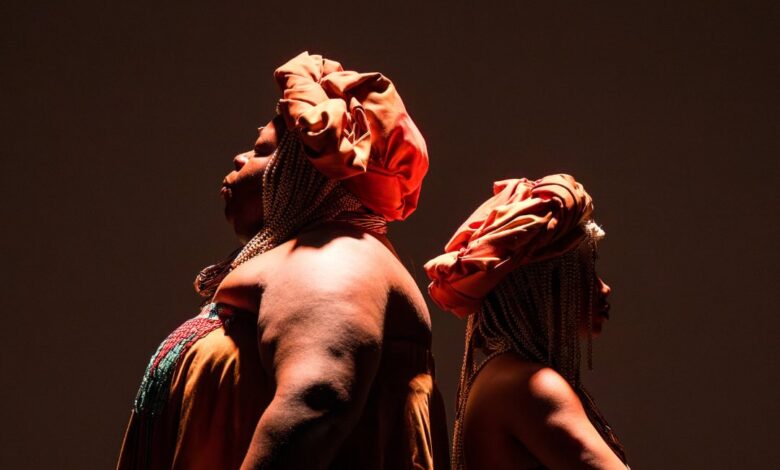
Dear Museum! | Albert Ibokwe Khoza and African Entertainer National Arts Festival, Makhanda
Some shows you watch. Some shows watch you back. Ibokwe Khoza’s Dear Museum! does not wait for you to catch up with it. It begins before you are ready and ends long after you leave the building. That it is a world premiere at this year’s National Arts Festival makes it one of the most significant pieces of new work the festival is hosting. It earns that significance.
The opening is a reflection offered directly to the audience. Not an introduction, not a scene setter, but an immediate reckoning. The room quietens in a particular way, the kind of quiet that signals something real is about to happen. Khoza earns that quiet and then earns everything that follows it. From the first movement it is clear that this is a performer operating with complete conviction in what they are making and why.
 01/05
01/05
Get seen where South Africa reads.
Homepage, category & newsletter placements.
02/05
Own the homepage. Just for a day.
Takeovers & sponsored placements, built to spec.
03/05
Don't wait for the 6 o'clock news.
Follow The Baseline on Facebook.
04/05
Straight to your phone. Before anyone else's.
Follow The Baseline on WhatsApp Channels.
05/05
News, refined.
No noise. Just the story.
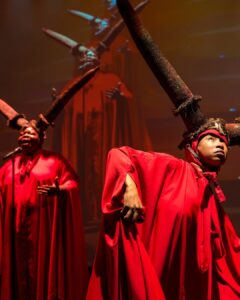
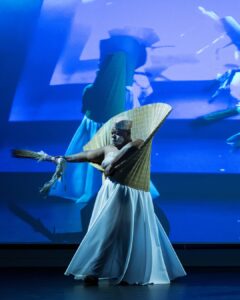
The dancing is where the show first reaches past the thinking mind. It is nostalgic and powerful in the same breath, the kind of movement that makes you feel your roots before you have had time to name them. Someone with no prior knowledge of the political conversation being had, no framework for the history being excavated, would still feel it. That is not a common thing. That is the mark of a performer who understands that the body receives what the mind sometimes refuses. The room in those early minutes is already somewhere else entirely.
What Dear Museum! asks of its audience is not comfortable. Eighteen minutes in and the discomfort is already settled. The show fixes its gaze on the ethnological museum as a site of ongoing colonial violence, a place where stolen things are called a collection and dispossession is rebranded as safekeeping. The question it plants in the room and refuses to retrieve is simple: what would remain of Europe’s cultural identity if everything taken were returned to where it belongs? Nobody in the audience answers. Nobody is entirely sure they could. That silence is part of the work.
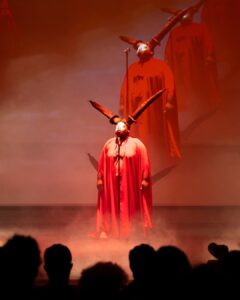
The dancing shifts as the show develops. It becomes at points a pointed mimicry of the coloniser, sharp and deliberate, with the Afrikaans insult voetsek woven into movement and song. It is a comedic insult with teeth. The audience receives it exactly as it is intended. Khoza moves between the sacred and the cutting without losing coherence, and the pacing throughout is meticulous. Nothing arrives before it is ready. The show touches on ukufemba, on Nonqawuse, on restoration and reparation, on the question of where the coloniser’s own ancestors live in the cultural imagination. So many threads and not one of them dropped. The fact that the performance unfolds across multiple languages is not incidental. It is a political statement about whose voice gets to fill a room and on what terms.
The segregation scene is where everything converges. Sound, movement, image and text arrive together and the cumulative weight is staggering. The music does something to the room that no stage direction could fully account for. Emotions run high. There are tears. There is a moment, in a visibly mixed audience with White audience members sitting inside the full weight of what has just been named, where the air in the room changes. Everyone feels it. The room has to breathe through it together. That kind of collective experience does not happen by accident. It is built, carefully and deliberately, by a performer who knows exactly what they are doing and is not afraid of where it leads.
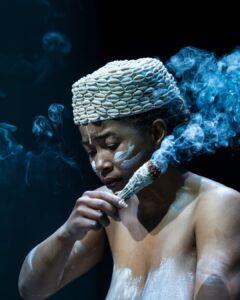
The intimate scene that follows strips the performance down to its most essential gesture. Khoza and the co-performer Julia Burnham move through what reads as a ritual of cleansing, a shedding of everything the show has excavated, a return to something underneath all of it. It is vulnerable and unhurried and it earns every second of the silence around it. After everything the room has just been through, it is exactly the right thing to do next.
The ending moves toward healing, toward restoration, toward the hope that return is still possible. It brings the show back to where the title always intended to land. Dear Museum! is both an indictment and, in its final breath, a love letter to what survives despite everything that was done to silence it.
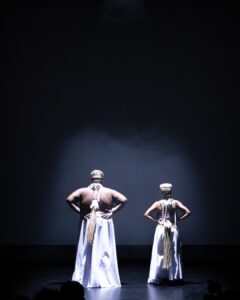
Dear Museum! is one of the finest pieces of theatre at this year’s National Arts Festival. Ibokwe makes work that the festival exists to platform. The kind of work that does not ask to be remembered because it makes forgetting impossible.
The festival may be over. The conversation this work started is not