
The South African Human Rights Commission has demanded the immediate dissolution of the Makana local municipality, concluding a three-year investigation into the region’s devastating water and sanitation crisis.
Presenting the final report during a live briefing in Makhanda on Wednesday, the human rights body urged the Eastern Cape provincial executive to invoke section 139 of the constitution to strip the current council of its powers. The inquiry found that the daily reality of dry taps and raw sewage spills is not due to a lack of regional bulk water, but rather a total structural failure to operate, manage, and maintain existing municipal infrastructure.
The comprehensive investigative report, compiled after consecutive subpoena hearings in 2024 and 2025, paints a picture of an institution entirely resistant to reform. Despite repeated interventions from the department of cooperative governance and a court-mandated financial recovery plan, the municipality has failed to reverse its operational decline. The commission noted that multiple support measures, including technical secondments and emergency stabilisation initiatives, have not translated into sustained institutional stability, leaving residents in high-lying areas and informal settlements to suffer disproportionately.
 01/05
01/05
Get seen where South Africa reads.
Homepage, category & newsletter placements.
02/05
Own the homepage. Just for a day.
Takeovers & sponsored placements, built to spec.
03/05
Don't wait for the 6 o'clock news.
Follow The Baseline on Facebook.
04/05
Straight to your phone. Before anyone else's.
Follow The Baseline on WhatsApp Channels.
05/05
News, refined.
No noise. Just the story.
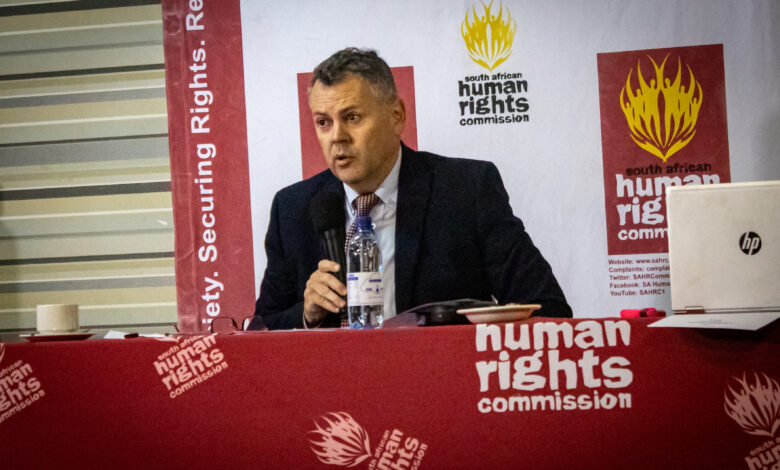
Speaking directly to stakeholders and municipal officials at the launch, the national commissioner, Henk Boshoff, delivered a severe rebuke of the local leadership.
“Are we not witnessing the characteristics of an uncaring municipality, a municipality that simply does not care about its residents and its communities?” he asked the audience.
He further noted that ordinary support and cooperative governance measures have consistently failed to produce sustained reform, leaving the commission with no choice but to recommend the ultimate constitutional sanction.
The provincial executive has been granted 90 days to provide a written response regarding the recommended dissolution of the council. Acknowledging that the approaching 4 November local government elections complicate the immediate unseating of the political leadership, the commission has committed to tabling its findings before the national council of provinces. This strategic move aims to have the recommendations adopted as binding parliamentary resolutions, effectively forcing both current and future administrations to implement strict consequence management.